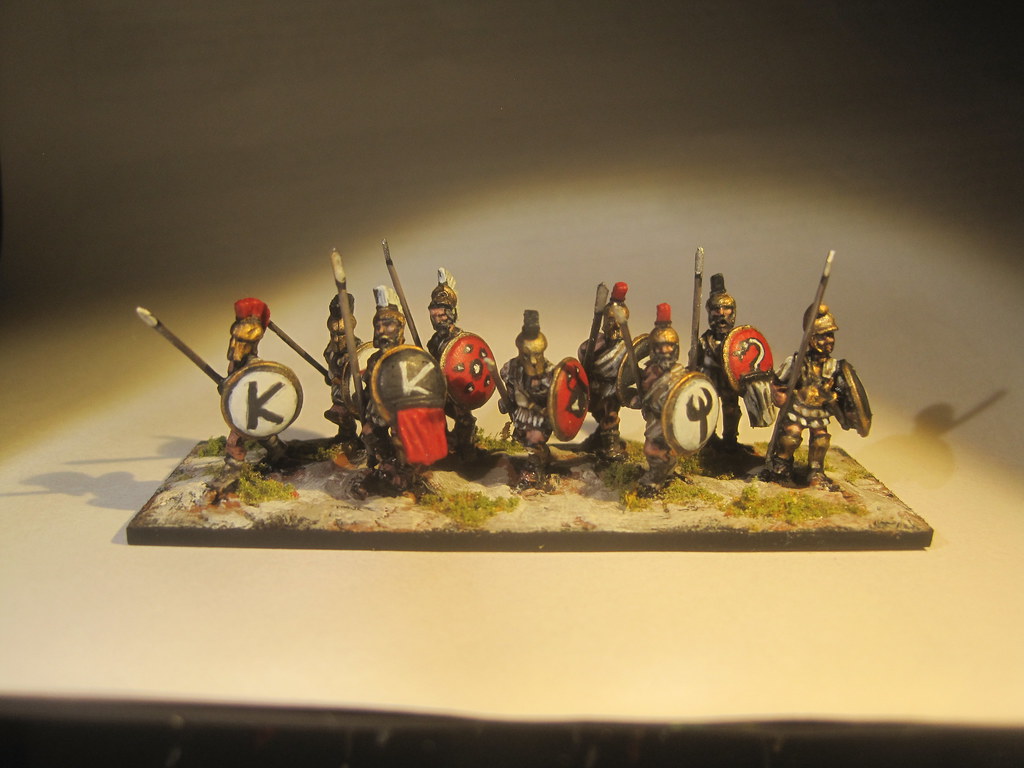
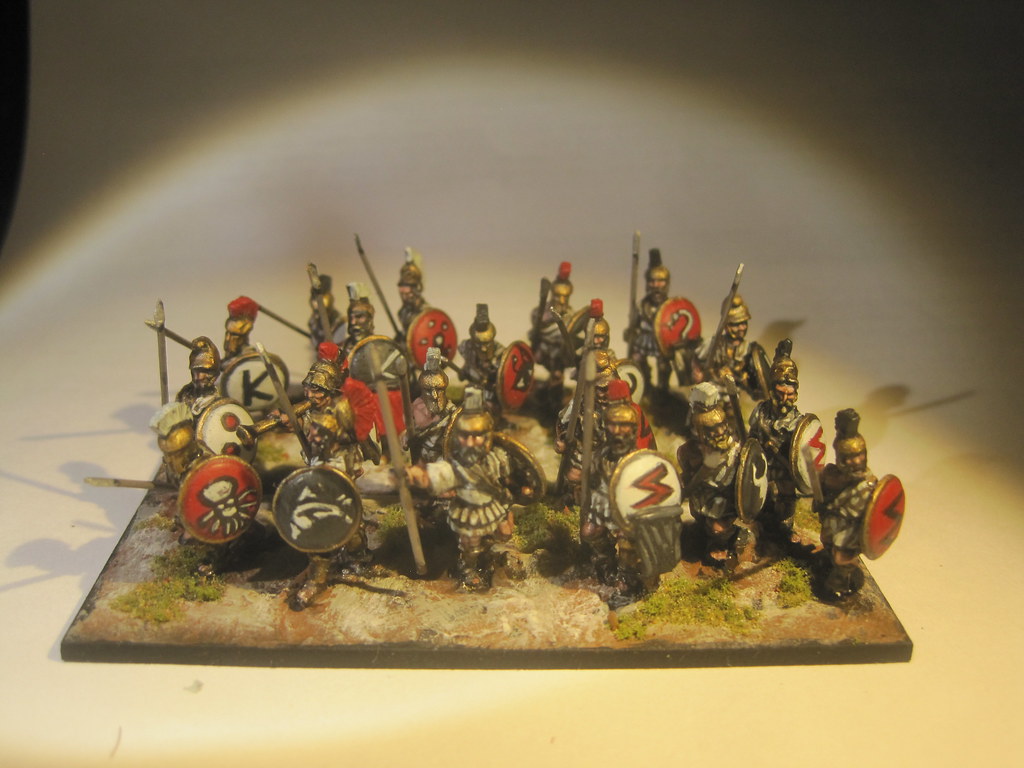
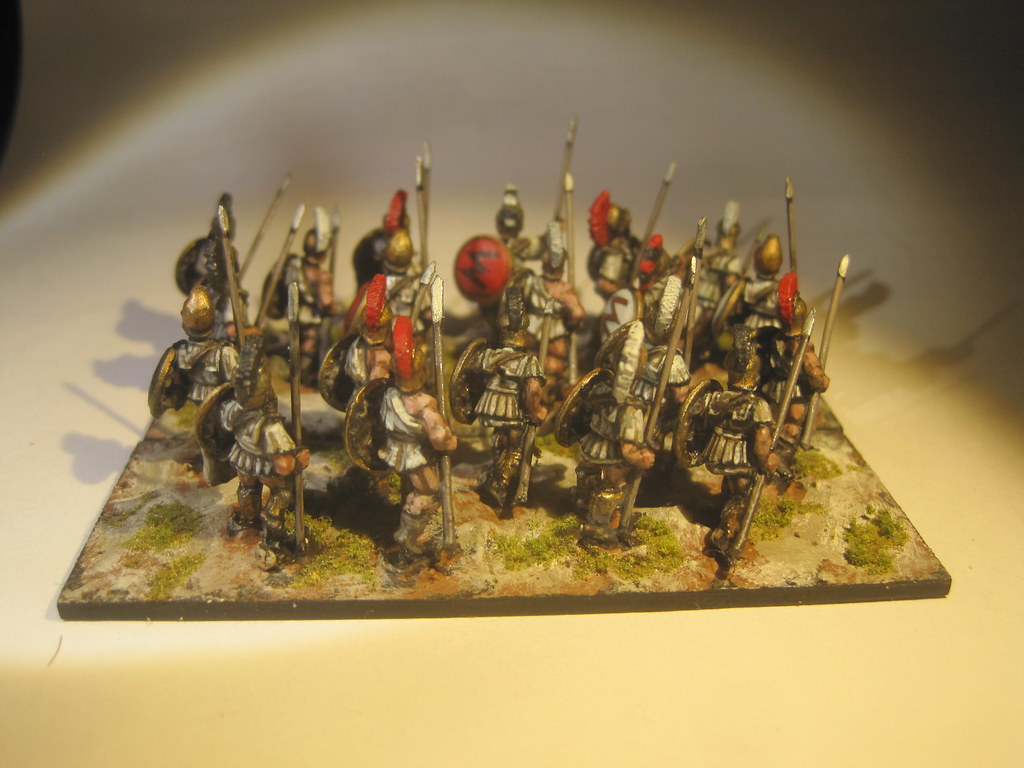
Hi all,
Finished up a toe in the water for a possible later Achaemenid Persian list.
 |
| Feeling so-so on these guys. Some worked, I think, some less so |
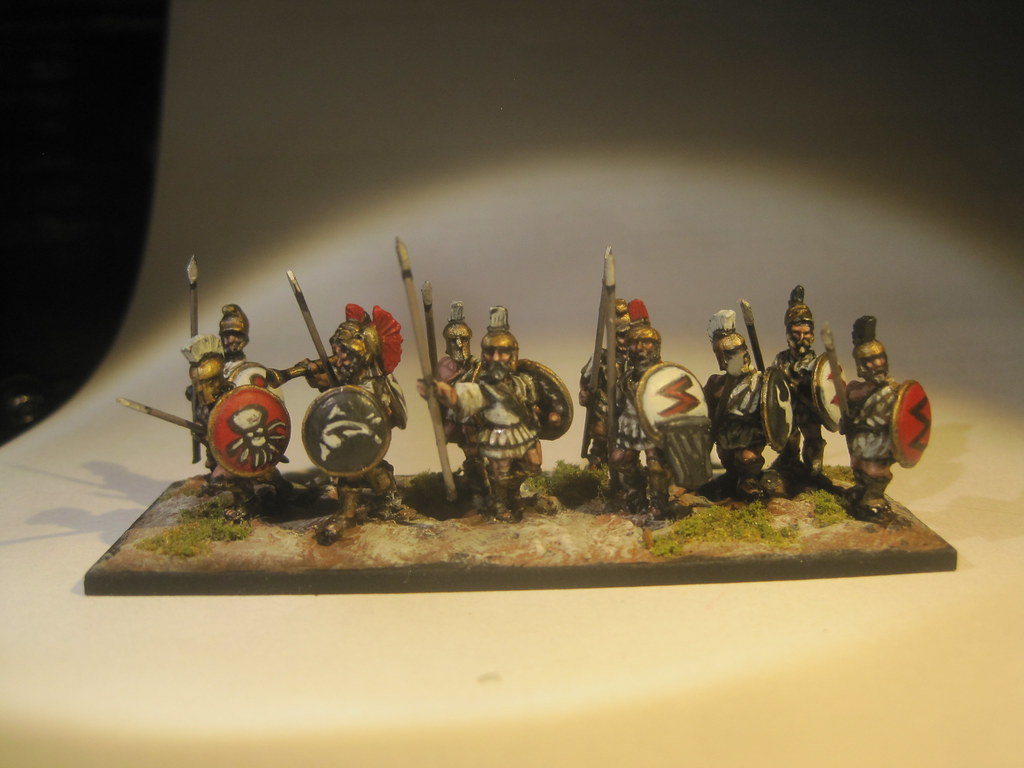
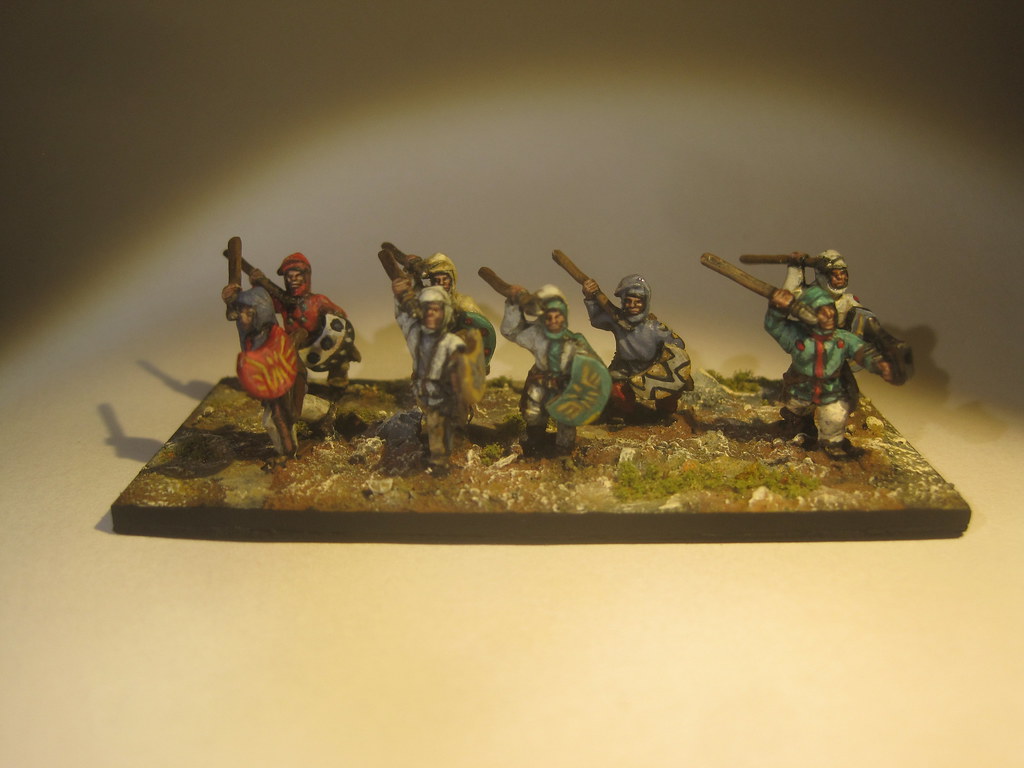
Impetus Unit Type: FL
Base Size: 8cm x 4cm
Manufacturer: Old Glory 15mm
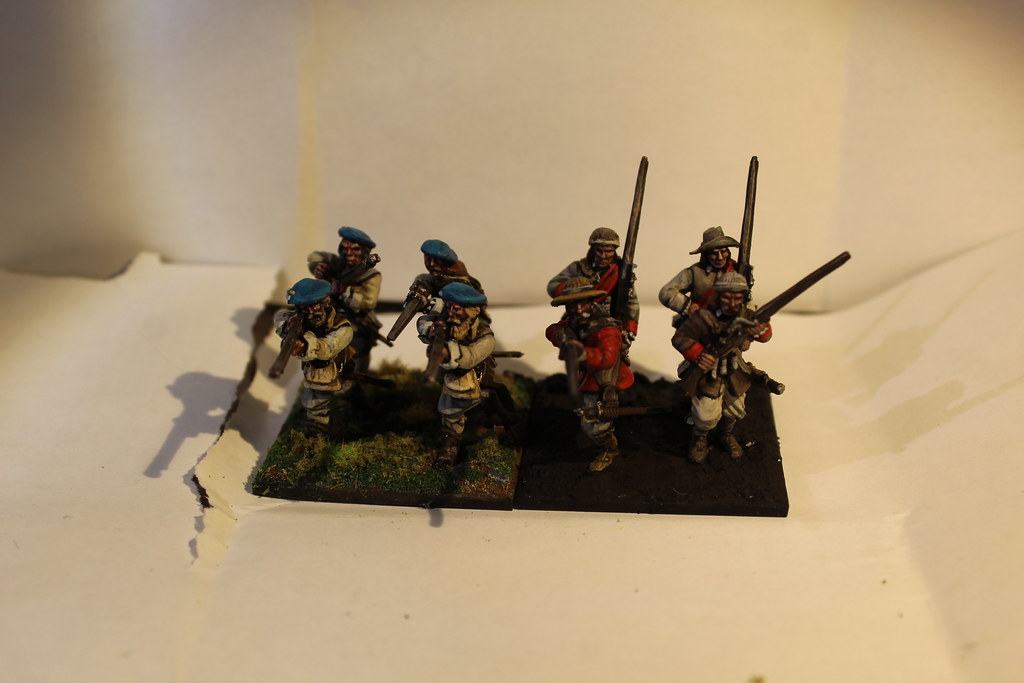
These are Kardakes, and were an interesting paint for a couple of different reasons. First, the unit type is one of the most confusing and contested that appear in Achaemenid lists, and one that effectively illustrates some of the foibles to which ancient games (and gamers) are susceptible. Second, they represented an effort on my part to produce the odd combination of both "colourful" and "muted" in their clothing.
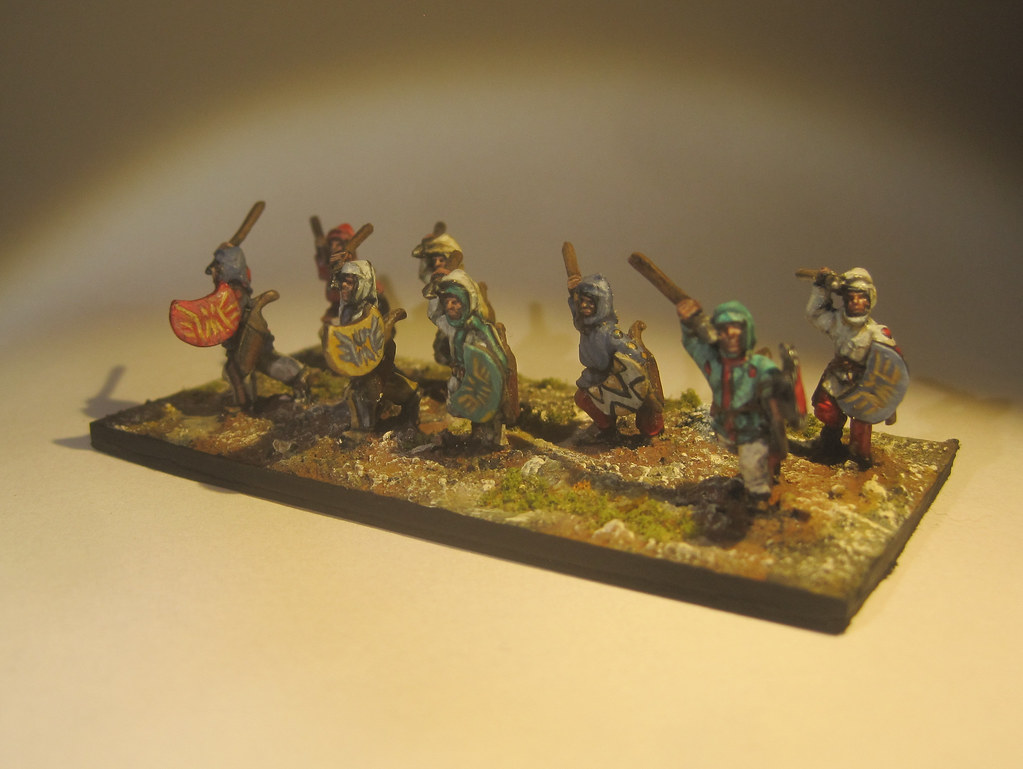 |
| Same with the shields. The pseudo-Achaemenid crest I "borrowed" from Madaxeman. |
The thing about ancients is, we really don't know an awful lot about them, which means there's a tendency to both over-emphasize the "correctness" of what we do know, and a tendency to wildly extrapolate from the same. You see this a fair bit in army lists. Achaemenid lists are generally broken up into two eras, early and late, with the former representing the armies that fought against the greek hoplites at Platea or Thermopylae, and the latter against Alexander at Issuus or Gaugamela. Lists from both eras are extrapolated from not very detailed, if roughly contemporary documents, and often from the work done by the WRG in the 70s. The thing is, those two periods are something like 150 years apart, and in between, the Persians did a heck of a lot of fighting, against other neighbors than the greeks, each other, and who know what all else. But because we really only know a little bit about them, mostly from greeks, and from periods where greeks paid attention and sources survived, this is where wargamers tend to focus, and even, I think, obsess.
 |
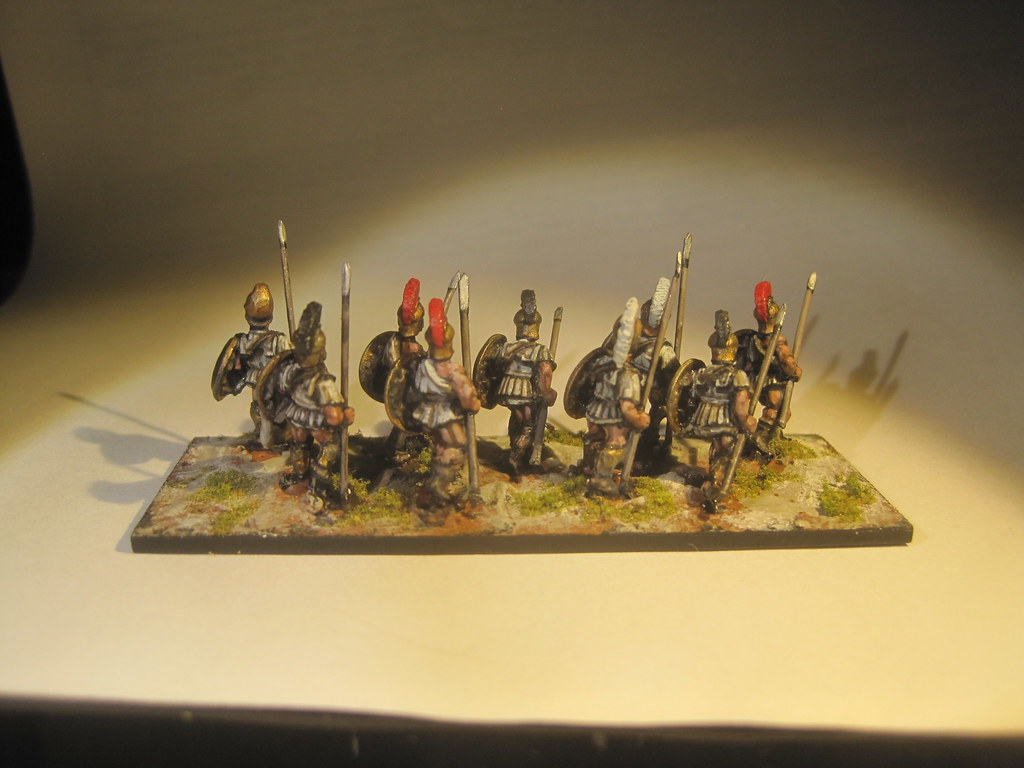
| Basing works, though. |
Which takes us to the Kardakes. There's a few references to these guys, and they're confusing. We know they made up a chunk of Persian forces in a couple of battles, we know they formed an identifiably distinct group to which the "Kardakes" label meaningfully applied, we know they were in the line of battle next to mercenary hoplites, and that Greek / Macedoniann horse were able to break through their lines. That's about it. From that people extrapolate that they were armed with hoplite panoply, armed like peltats, that they were a distinct class of troops, that they were a distinct culture group, and so on. And oh, do they argue, with fervor, vigor, and spite. After much perusing of both source material and derived opinion (as well as some consultation with my personal expert on Persians, JJM), I decided the hell with it, and painted up the figures I have.
I picked up these guys up as part of the same swap that got me into ancients, and got me started on my Antigonids. They're OG15 Kardakes, which only come as this kind of light foot / peltast type, so that's what I'm running them as. Kardakes as light infantry in vaguely Persian dress is certainly plausible, so why not? I'll have a few units of them in the projected list, along with lots of cavalry, etc. (one of the things that distinguishes "late" from "early" persian lists tends to be the de-emphasis on foot bow in favour of masses of cavalry). My plan is to loosely base my force around the Persians that fought at Cunaxa, so nominally "later" Persians, but not the ones that fought against the Macedonians. It also gives me as close to a blank slate as one gets, in that we know there were a chunk of mercenary hoplites, some greek peltasts, a good chunk of Paphlagonian cavalry, and lots and lots of Persians and levies, both on horse and on foot. The vaguely designated "Persian" contingent covers a pretty wide sweep, and give room in the list for plenty of choice.
FMB